SCROLL TO CONTINUE
The layer agents interact with.
When an agent starts a task, Memorable automatically finds the relevant workflow and guides the agent through it.
Connect every workflow.
Shared steps and prefixes reveal new paths, allowing Memorable to compose workflows and learn implicit skills.
Turn a successful run into a reusable workflow.
Memorable removes dead ends and keeps the sequence of steps that reached the goal.
The raw record of an agent session.
A prompt, followed by the tool calls it produced: files read, commands run, and results returned, in order.
For anyone running agents that do the same work more than once.
Known segments of a site replay from the procedure. A layout change is detected and the agent falls back to reasoning.
Each step stores only what changed on screen. The target is named by what it is about, so a moved button still matches.
Routines taught in past sessions come back whole. Sensitivity gates at delivery, so the agent can know things it never says.
Procedures come from Claude Code and Codex sessions, no code changed. The command that verified the fix travels with the procedure.
Any harness sends one JSON trace to POST /v1/extract. Store it on your own machine, your gbrain database, or your Postgres. Consent is fail-closed.
A procedure one agent recorded is recalled by every other agent on the same store.
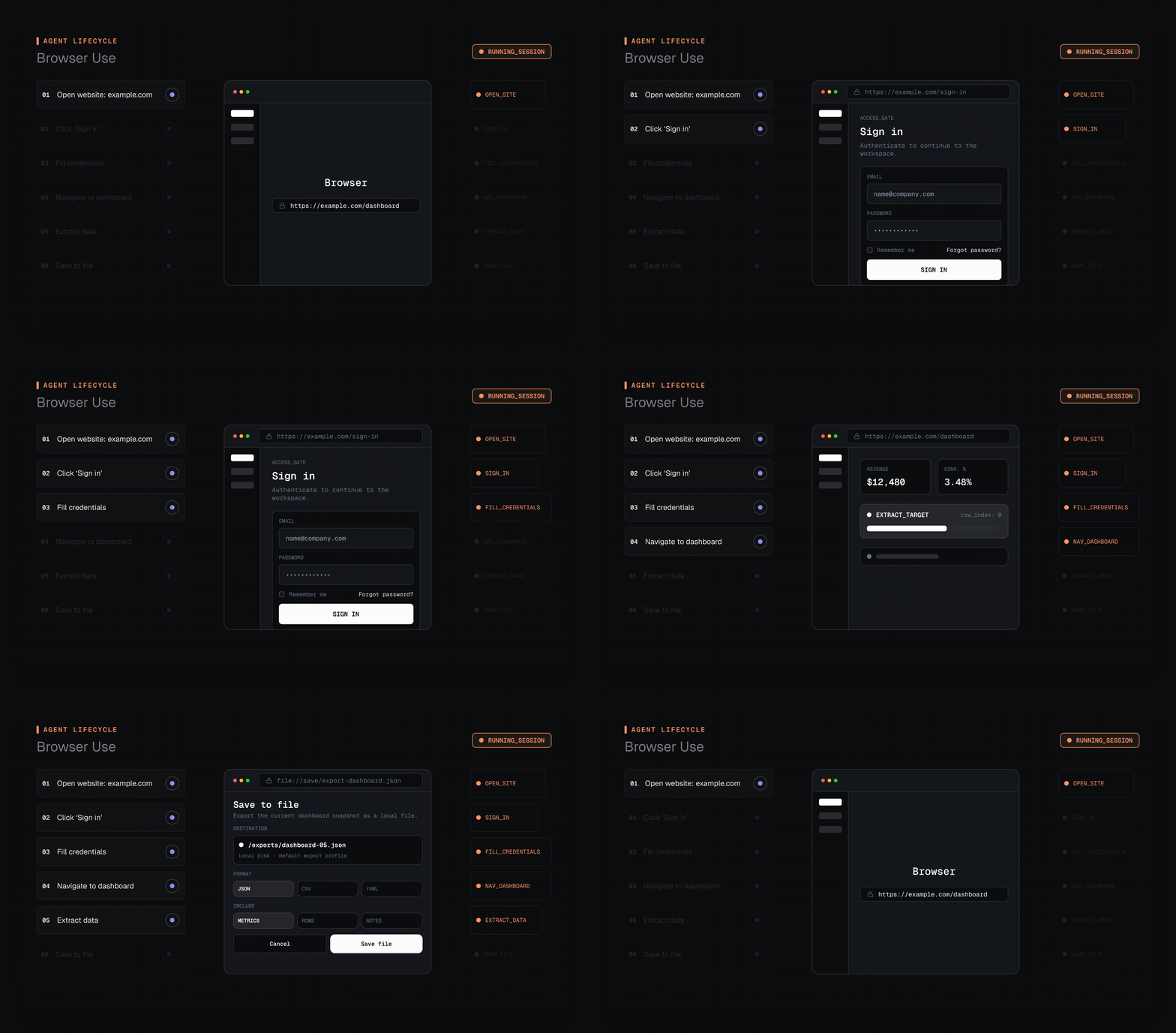



Claude Code, Codex, Cursor, Claude Cowork, gbrain, and QM. Any other harness sends one JSON trace to POST /v1/extract. A read-only MCP server exposes five tools.
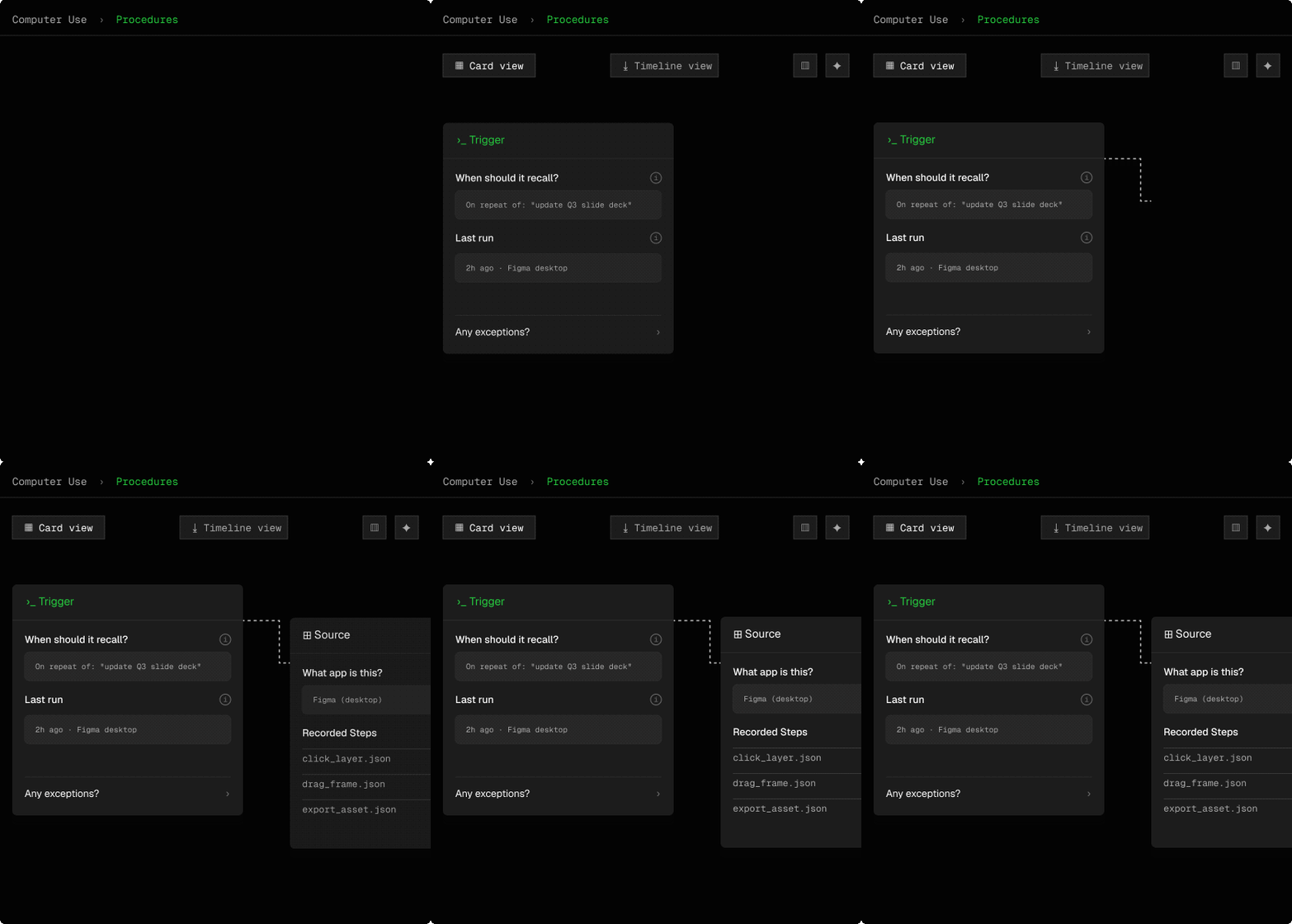
Vector search returns chunks of text. Memorable stores procedures: steps with a precondition, a postcondition, and the outcome that decided whether the run passed. The step parse is deterministic: the same trace gives the same steps.
Procedures live in your own store: a local file, your gbrain database, or your Postgres. Embeddings are computed server-side. Only the prompt and allow-listed tool arguments leave the machine.
Recall adds about 60 milliseconds to a prompt. Three matchers run in order: exact, then lexical, then semantic on a miss.
The dashboard shows every stored procedure: steps, preconditions, postconditions, and the time, tokens, and money spent on each run.